
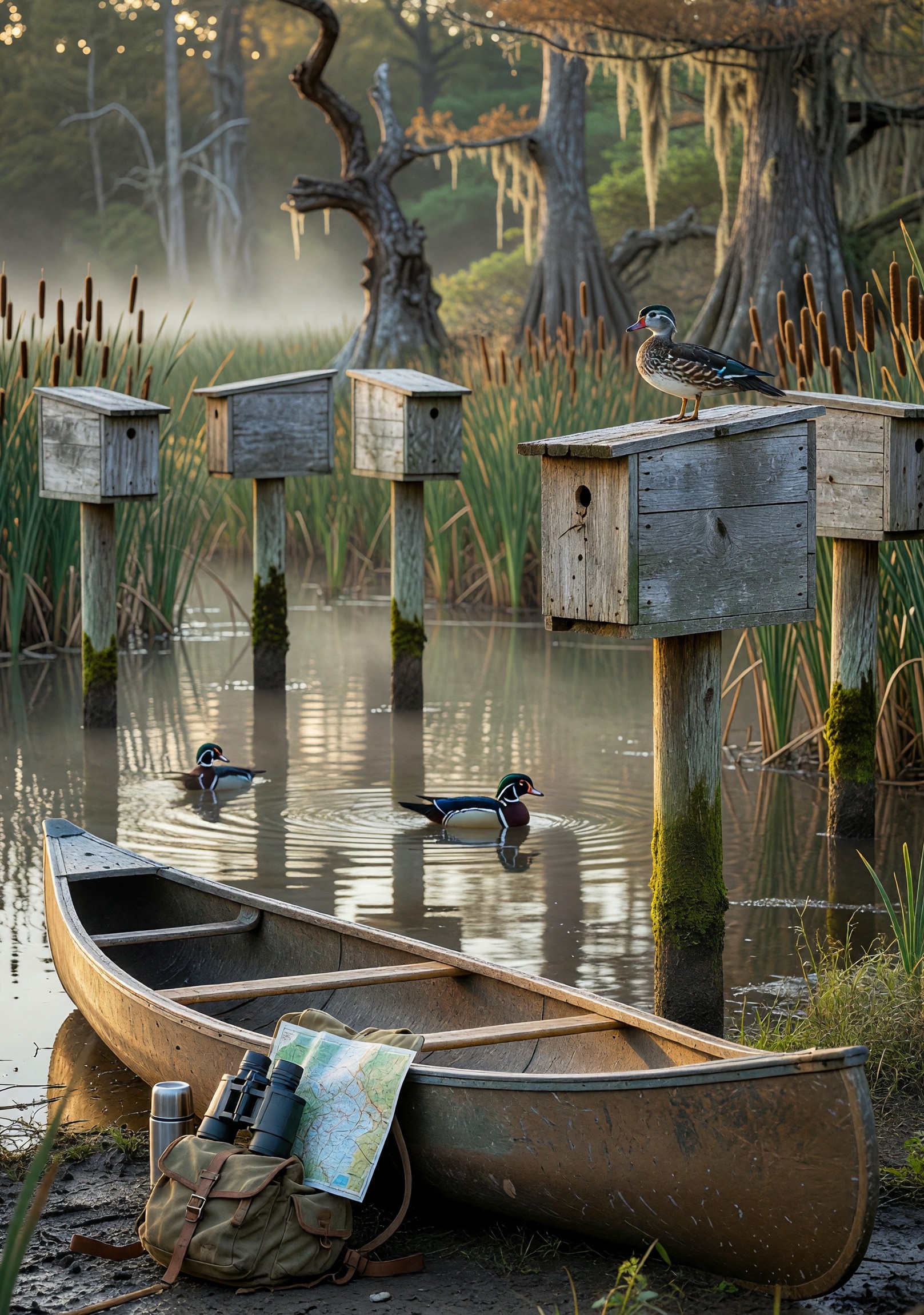
Wood duck boxes are more than just simple birdhouses; they’re vital tools in wildlife conservation that offer outdoor enthusiasts a unique way to connect with nature. These specially designed nesting structures provide safe havens for wood ducks, one of North America’s most colorful and elusive waterfowl, whose populations have rebounded thanks to dedicated efforts like these boxes. Placed along wooded wetlands, rivers, and ponds, they mimic natural tree cavities that wood ducks prefer but are often scarce due to habitat loss.
For birdwatchers, photographers, and conservation volunteers, engaging with wood duck boxes opens doors to immersive outdoor adventures. Imagine paddling a quiet river at dawn, spotting a hen duck leading her brood from a box, or participating in a community installation project. These experiences not only boost biodiversity but also foster a deeper appreciation for wetland ecosystems. Whether you’re a novice birder or a seasoned naturalist, planning trips around wood duck box sites combines relaxation, education, and hands-on environmental stewardship. This season, explore these hotspots to witness the magic of wood ducks up close, while learning practical tips on observation etiquette, seasonal timing, and how your involvement can support ongoing conservation. With spring nesting and fall migrations in mind, these adventures promise rewarding encounters amid stunning natural backdrops.
Top 10 Wood Duck Boxes Adventures to Plan This Season
#1 Great Dismal Swamp National Wildlife Refuge, NC/VA
This vast 112,000-acre refuge is a premier spot for wood duck sightings, with numerous boxes installed along its canal systems and wooded swamps. Spring (March-May) is ideal for observing nesting pairs, as males display their vibrant plumage during courtship. Paddle the Dismal Swamp Canal in a canoe for stealthy approaches, keeping at least 50 feet distance to avoid disturbing birds.
Volunteers can join refuge-led box maintenance workshops; check for permits via the U.S. Fish and Wildlife Service website. Bring binoculars and insect repellent—mosquitoes are plentiful. Safety tip: Stick to marked trails to navigate the dense underbrush safely.
#2 Everglades National Park, FL
In the subtropical heart of the Everglades, wood duck boxes dot mangrove-lined waterways, supporting populations in this unique wetland. Visit during winter (December-March) when migratory wood ducks join residents, offering prime photography opportunities from airboat tours or kayak rentals.
Focus on the Shark River Slough area; guided eco-tours often highlight box locations. Obtain a park entrance permit ($30/vehicle) and use polarized sunglasses for better water views. Remember to apply sunscreen and stay hydrated in the humid conditions.
For deeper involvement, partner with the Florida Fish and Wildlife Conservation Commission for box monitoring programs.
#3 Upper Mississippi River National Wildlife Refuge, WI/IL
Stretching 261 river miles, this refuge hosts hundreds of wood duck boxes amid its forested floodplains. Late spring (April-June) brings active broods to the wing dams and backwaters—perfect for birders using the Great River Road for access.
Rent a johnboat from local outfitters and equip with a spotting scope for distant views. No special permits needed for casual visits, but check river levels for flooding risks. Pack life jackets and watch for strong currents.
#4 Blackwater National Wildlife Refuge, MD
On Maryland’s Eastern Shore, this refuge’s cypress swamps are dotted with wood duck boxes, attracting families during breeding season (February-May). Hike the Marsh Edge Trail or paddle the Little Blackwater River for intimate encounters.
Entry is free, but dawn visits yield the best sightings. Bring a field guide to identify duck calls, and consider joining annual box checks with refuge staff. Wear waterproof boots for muddy paths and be mindful of ticks.
#5 Reelfoot Lake State Park, TN
Formed by the 1811 New Madrid earthquake, this oxbow lake features submerged forests ideal for wood ducks, with boxes enhancing nesting success. Fall (September-November) migration offers colorful spectacles; fish from shore or boat while observing.
A $5 daily permit covers entry and boating. Use the park’s observation decks to minimize disturbance. Safety note: Watch for sudden water level changes due to weather.
Local Audubon chapters host guided watches—sign up in advance.
#6 Horicon Marsh National Wildlife Refuge, WI
America’s largest freshwater cattail marsh supports robust wood duck populations via strategically placed boxes. Spring (March-May) is peak for viewing from the auto tour route or boardwalks.
Free entry, but vehicles must stay on roads. Equip with a camera trap for ethical documentation. In cooler months, layer clothing for variable winds off Lake Michigan.
#7 Cache River National Wildlife Refuge, AR
This Arkansas gem’s bald cypress bottoms host wood duck boxes in remote bayous. Early summer (May-July) reveals ducklings learning to fly—access via canoe on the Cache River.
Obtain a free refuge permit online. Paddle with a partner for safety in alligator territory, and carry a first-aid kit. Join Arkansas Game and Fish Commission workshops for hands-on box building.
#8 St. Marks National Wildlife Refuge, FL
Along the Gulf Coast, this refuge’s tidal marshes and ponds feature wood duck boxes, thriving in winter (November-March). Bike the Stony Bayou Trail or kayak the Wakulla River for sightings.
$5 entry fee; rent bikes on-site. Use tide charts to time visits—low tide exposes more habitat. Protect against salt spray with corrosion-resistant gear.
#9 Silvio O. Conte National Fish and Wildlife Refuge, VT/NH
Spanning the Connecticut River Valley, this northern refuge uses boxes to bolster wood ducks in forested wetlands. Fall (October-December) colors enhance viewing from the Pondicherry unit’s trails.
No fees, but check for hunting seasons. Bring warm layers for crisp mornings and use apps like eBird for real-time sightings. Volunteer opportunities include box installations.
#10 Barnegat Division of Edwin B. Forsythe National Wildlife Refuge, NJ
This coastal refuge’s impoundments and woods support wood ducks with boxes along the Barnegat Bay. Spring migration (April-May) is vibrant; explore via the wildlife drive or kayak tours.
$4 entry; early mornings avoid crowds. Watch for boat traffic and wear PFDs on water. Connect with local birding groups for box monitoring events.
Key Takeaways
- Always maintain a 50-foot buffer zone around wood duck boxes to prevent stress to nesting birds.
- Check seasonal conditions—spring for breeding, fall for migration—and obtain necessary permits from the U.S. Fish and Wildlife Service or state agencies.
- Essential gear includes binoculars, waterproof footwear, insect repellent, and a life jacket for water-based activities.
- Prioritize safety by traveling with a buddy in remote areas and monitoring weather for floods or storms.
- Contribute to conservation by volunteering for box maintenance; contact local Audubon societies for opportunities.
- Use ethical observation practices, like no baiting, to protect wildlife habitats.
- Pack out all trash to preserve the pristine environments where wood ducks thrive.
How to Get Started
To dive into wood duck box adventures, begin by researching local wildlife refuges via the U.S. Fish and Wildlife Service website or apps like AllTrails for accessible sites. Join a birdwatching group through the National Audubon Society for guided outings and expert tips. Invest in basic gear: a pair of 8×42 binoculars ($100-200) and a waterproof field journal. Plan your first trip for spring, securing any required permits in advance—many refuges offer free entry, but boat launches may incur fees. Start small with a day hike to a nearby box site, noting behaviors in your journal to build skills. For hands-on involvement, attend a free workshop on box construction; materials like cedar boards and predator guards are affordable and available at hardware stores. Track your progress with eBird to contribute to citizen science, turning your passion into meaningful conservation impact.