
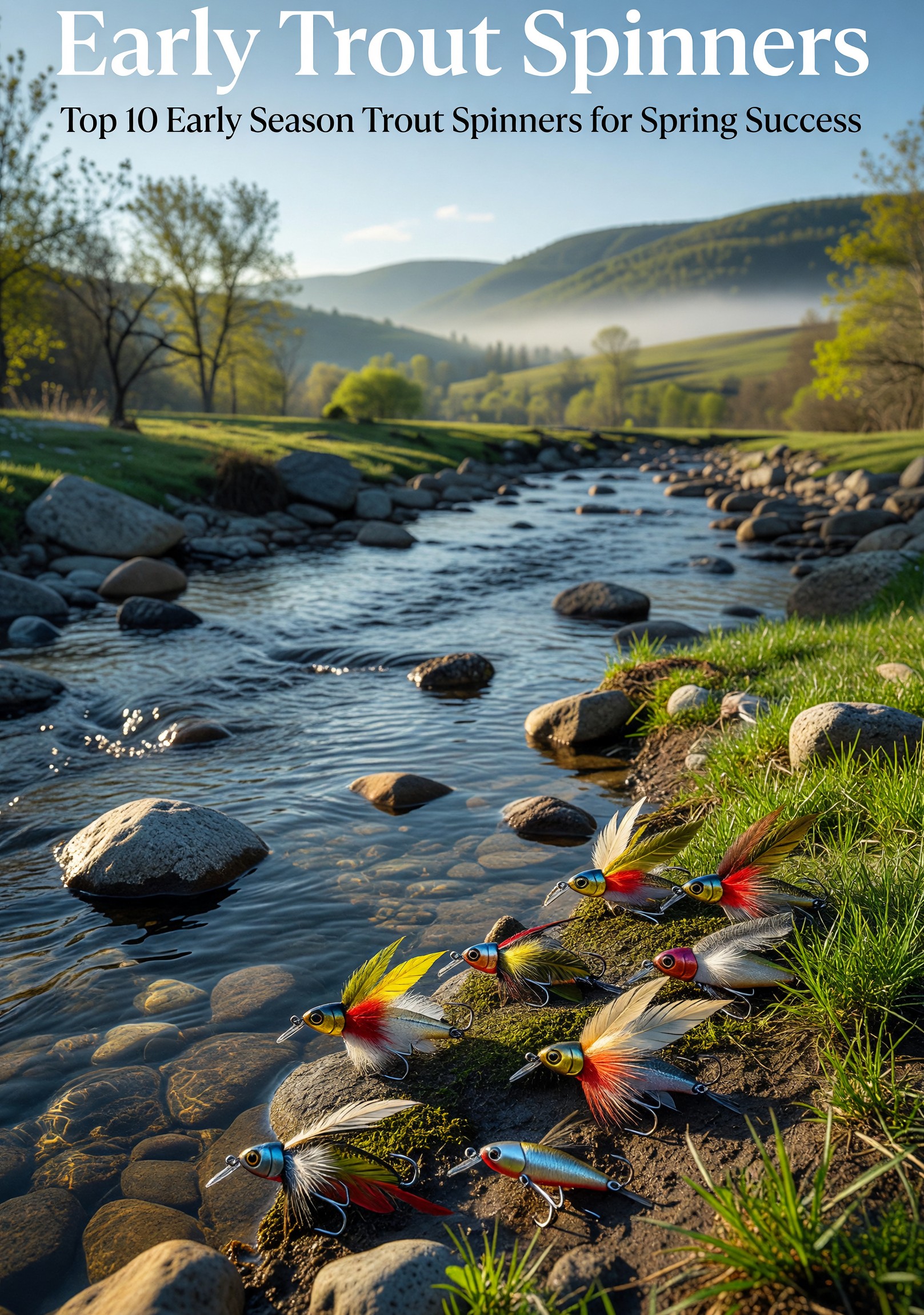
As the first hints of spring thaw the icy grip on rivers and streams, early season trout fishing beckons outdoor enthusiasts with the promise of pristine waters and eager fish. Early trout spinners—those versatile lures designed to mimic the frantic dart of baitfish and insects—are essential tools for this fleeting window. From late March through May, depending on your region, water temperatures hover in the 40-50°F range, making trout more active and aggressive after a long winter. This is prime time for landing trophy rainbows, browns, and brookies before summer crowds arrive.
Why does it matter? Early season offers solitude, stunning scenery of budding landscapes, and the thrill of outsmarting fish in clear, cold flows. Spinners excel here because their flash and vibration cut through chilly water to provoke strikes from lethargic trout. Whether you’re a novice wading a local creek or a seasoned angler targeting remote mountain streams, selecting the right spinner can make or break your outing. In this guide, we’ll explore the top 10 early trout spinners, packed with practical tips on colors, sizes, and techniques to boost your success. Remember, always check local regulations for bag limits and seasonal openings—sustainable practices ensure these adventures endure for generations.
These picks are battle-tested for early conditions: smaller blades for slower retrieves in cold water, and finishes that pop in low-light mornings. Pair them with light spinning gear (6-8 lb test line, 6-7 ft ultralight rod) for optimal feel and control. Let’s dive into the lineup and get you hooked on spring’s finest angling pursuits.
Top 10 Early Trout Spinners
#1 Mepps Aglia
The Mepps Aglia is a classic inline spinner that’s a must-have for early trout pursuits. Its small #0 or #1 size with a gold or silver blade creates a tight wiggle ideal for the sluggish currents of spring streams. The marabou tail adds lifelike action, enticing rainbows in water as cold as 42°F.
Best for freestone rivers like those in the Rockies or Appalachians during April openers. Tip: Use a slow, steady retrieve near undercut banks where trout hold for warmth. In murky post-thaw flows, opt for brighter blades to maximize flash.
#2 Worden’s Original Rooster Tail
Renowned for its hackle tail that pulses like emerging insects, the Rooster Tail shines in early season when trout key on nymphs. The 1/16 oz version in chartreuse or black is perfect for brook trout in shaded Northeast creeks.
Fish it April-May in places like Vermont’s Battenkill River. Pro advice: Add a split shot 18 inches above for deeper drifts in riffles, and always pinch barbs to minimize handling stress on wild fish.
#3 Blue Fox Pixee
This Swedish import features a unique hammered blade for extra vibration, cutting through cold, debris-laden waters post-snowmelt. The #2 size in copper excels for brown trout ambushing from deep pools.
Ideal for Pacific Northwest streams in March. Retrieve erratically to mimic injured minnows, and pair with polarized glasses to spot rising fish in clearer tailwaters.
#4 Panther Martin
The Panther Martin’s inline design with a dressed tail offers unbeatable versatility for early openers. Go for the 1/8 oz in yellow with black spots to imitate daphnia, a favorite spring forage.
Target Midwestern lakes like those in Michigan during ice-out. Tip: Cast upstream and let it swing naturally—watch for the subtle ‘tick’ of a strike in slow pools.
#5 Johnson’s Sprite
A budget-friendly powerhouse, the Sprite’s slim blade spins smoothly even in low flows, making it great for finicky early trout. The 1/12 oz gold model triggers strikes in shallow runs.
Perfect for Southern tailwaters like Tennessee’s Clinch River in late winter. Use short twitches to provoke reaction bites, and check for treble hooks that might snag in weedy margins.
#6 Thomas Buoyant Spinner
This floater-diver hybrid suspends at mid-depths, ideal for prospecting early season lakes. The 1/8 oz in rainbow pattern fools stocked trout rising to the surface.
Fish Colorado reservoirs in April. Retrieve with pauses to let it hover, simulating a wounded baitfish—essential in variable spring winds.
#7 Little Cleo Spoon Spinner
Though technically a spoon, its wobble mimics spinners perfectly for aggressive early strikes. The 1/4 oz chrome version slices through currents for lakers.
Suited to Great Lakes tributaries in May. Tip: Vary speed based on water temp—faster in warming flows above 48°F for explosive follows.
#8 Kastmaster Spoon
Acme’s Kastmaster casts like a bullet, reaching distant early season holes. The 1/8 oz nickel finish flashes subtly for spooky brookies.
Explore Alaskan streams pre-spawn. Long casts followed by a jiggle retrieve work wonders; always carry pliers for safe releases in remote areas.
#9 Joe’s Flies Spinner
Blending fly and spinner traits, this articulated lure imitates hatching caddis in cold water. The micro size in natural tones targets selective Western cutthroats.
Best in Montana’s Madison River during April hatches. Dead-drift it like a nymph for stealthy presentations, emphasizing light tippet for clear conditions.
#10 Blue Fox Vibrax
The Vibrax’s brass body and bead create a humming vibration that travels far in frigid streams. Opt for #1 silver for universal early appeal.
Great for Canadian backcountry waters in spring. Fan-cast across pools, and respect catch-and-release to preserve populations in fragile habitats.
Key Takeaways
- Always verify fishing licenses and seasonal permits—early openers vary by state, like Colorado’s June 1 for lakes.
- Layer for variable weather: waterproof waders, neoprene gloves, and quick-dry base layers prevent hypothermia in 40°F water.
- Choose ultralight rods (6-7 ft, 4-8 lb line) to detect subtle bites from cold-stunned trout.
- Pack a first-aid kit with hook removers and antiseptics; practice barbless hooks for ethical angling.
- Monitor water levels post-thaw—avoid high flows that can sweep you off your feet; use wading staffs for stability.
- Leave no trace: Pack out all trash to protect spawning grounds from pollution.
- Test spinners pre-trip; rusty blades lose flash, reducing effectiveness in low-visibility springs.
How to Get Started
To launch your early trout spinner adventures, begin by scouting local waters via apps like Fishbrain or USGS stream gauges for safe, open conditions. Invest in a basic kit: three top spinners (Aglia, Rooster Tail, Panther Martin), a compact tackle box, and quality polarized sunglasses for spotting fish. Head to a nearby stream or lake on the season’s opening weekend—arrive at dawn for the best bites when trout feed aggressively.
Practice casting in your backyard to master the sidearm technique, avoiding snags in overhead cover. Join a local fly shop’s guided trip for insider spots and techniques; many offer beginner clinics in spring. Track your outings in a journal noting water temp, spinner success, and hatches to refine your approach next time. With patience and respect for nature, you’ll soon be reeling in memorable catches—happy fishing!