
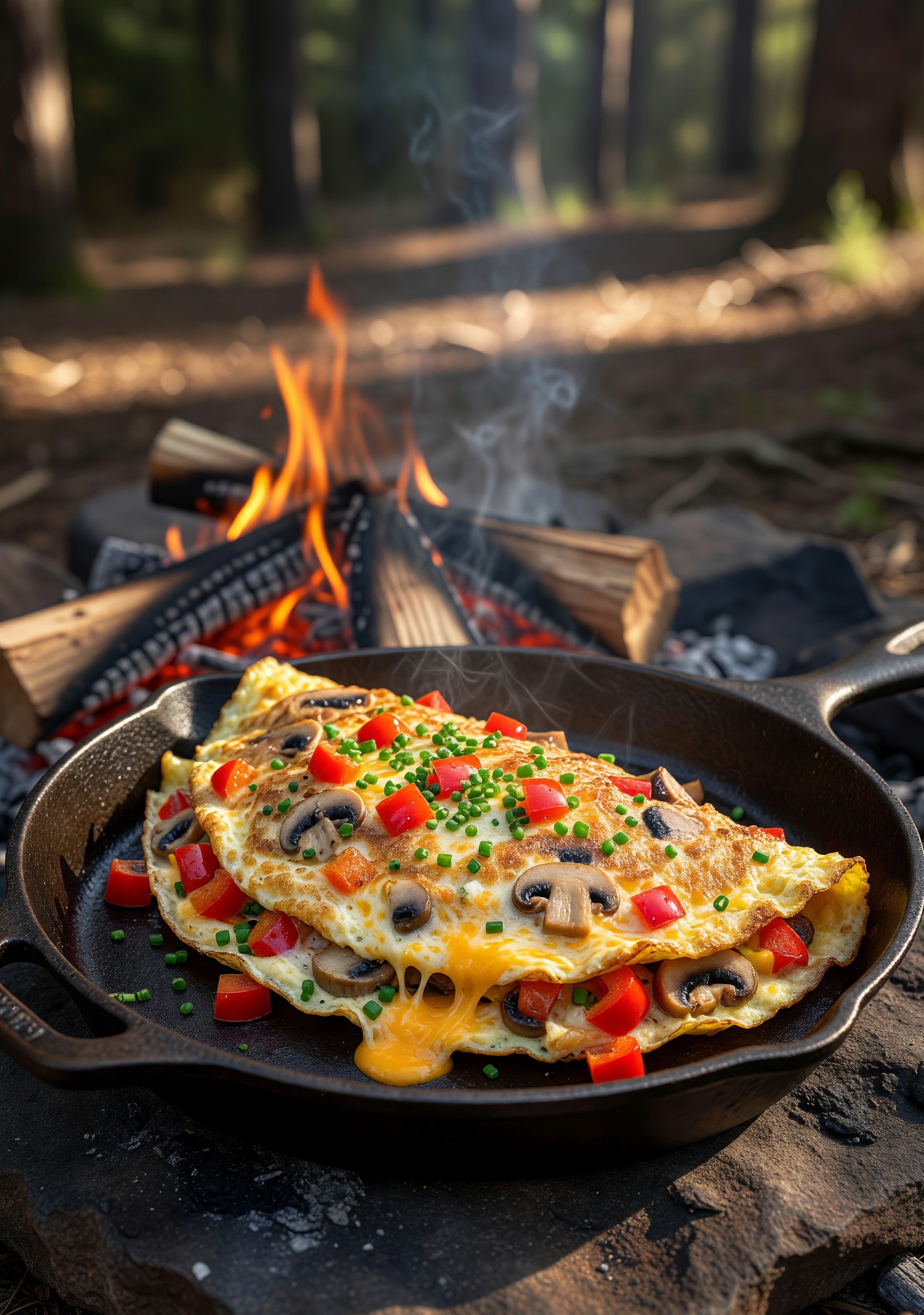

Imagine waking up to the crisp morning air in the heart of the wilderness, the first rays of sun filtering through the pines, and the gentle crackle of your campfire coming to life. As an outdoor enthusiast, there’s nothing quite like starting your day with a hot, hearty breakfast that fuels your adventures ahead. Enter the campfire omelet—a simple yet satisfying dish that’s tailor-made for the great outdoors. Why does it shine over a flickering flame? It’s incredibly versatile, using everyday ingredients you can pack light, and it cooks up fluffy and golden in just minutes on a cast-iron skillet. No fancy gadgets required; just the primal satisfaction of cooking over open fire.
The beauty of this recipe lies in its adaptability to whatever you’ve got on hand—fresh veggies from your garden or foraged greens, bits of leftover sausage, or even wild mushrooms if you’re feeling adventurous. As the eggs sizzle and the aromas of melted cheese and herbs waft through the campsite, you’ll feel that deep connection to nature. It’s not just food; it’s a ritual that energizes you for hiking trails or casting lines at dawn. Field-tested on countless trips, this omelet has saved many a groggy morning, transforming simple eggs into a gourmet treat with that signature smoky flavor only a campfire can impart. Get ready to impress your fellow campers and kick off your day with a burst of flavor and warmth—your taste buds (and belly) will thank you!
Recipe Overview
Prep Time: 10 minutes
Cook Time: 10-15 minutes
Servings: 2
Difficulty Level: Easy
Special Equipment Needed: Cast-iron skillet (10-inch preferred for even heat), long-handled spatula, heat-resistant gloves, and a stable campfire setup with a grate or tripod for hanging the skillet over coals.
Ingredients List
- 4 large eggs (fresh for best fluffiness; if camping long-term, consider powdered eggs as a lightweight sub)
- 1/4 cup milk or water (for lighter texture; use what you have, even a splash from your canteen)
- 1/2 cup shredded cheese (cheddar or your favorite; pre-shredded packs well and melts smoothly over fire)
- 1/4 cup diced bell peppers or onions (campfire adaptation: chop veggies small to cook quickly; sub with wild onions if foraging)
- 1/4 cup diced ham or cooked sausage (optional protein boost; use shelf-stable jerky chopped fine if fresh meat isn’t available)
- Salt and pepper to taste (bring a small shaker; add herbs like chives for extra wilderness flair)
- 1 tablespoon butter or oil (butter for richer flavor, oil for non-stick ease on cast iron)
- Optional add-ins: Spinach, tomatoes, or mushrooms (1/4 cup total; choose fresh, packable items that won’t spoil quickly)
Step-by-Step Instructions
-
Build a steady campfire: Start with dry tinder and kindling to create a hot bed of coals—aim for medium heat, not roaring flames, to avoid scorching your omelet. Let the fire burn down for 20-30 minutes until you have glowing embers. Safety first: Keep a bucket of water nearby and clear a 10-foot radius around the fire.
-
Prep your ingredients: In a bowl (or directly in a sealable bag for minimal cleanup), whisk the eggs with milk, salt, and pepper until frothy. This incorporates air for that perfect fluff. Chop veggies and protein into small pieces—they’ll cook fast over the fire. Pro tip: Do this away from the smoke to keep your eyes clear.
-
Heat the skillet: Place your cast-iron skillet over the coals using a grate or tripod. Add butter or oil and let it melt, swirling to coat. It should shimmer but not smoke—test by flicking a drop of water; if it sizzles, you’re ready. Wear gloves to avoid burns from radiant heat.
-
Cook the fillings: Toss in diced veggies and ham first. Sauté for 2-3 minutes, stirring with the spatula until softened and fragrant—the smoky aroma will start filling the air, blending with the earthy campfire scent.
-
Add the eggs: Pour the egg mixture over the fillings. Let it set for 1-2 minutes, then sprinkle cheese on one half. Gently lift edges with the spatula to let uncooked eggs flow underneath, promoting even cooking without flipping the whole thing.
-
Fold and finish: Once the eggs are mostly set (about 4-5 minutes), fold the omelet in half with the spatula. Cook another 2-3 minutes until the cheese melts into gooey perfection and the bottom is golden. The texture should be creamy inside with a slight crisp from the cast iron.
-
Serve immediately: Slide onto plates (or eat straight from the skillet for that rustic vibe). Garnish with fresh herbs if available. Enjoy the warm, fluffy bite amid the morning chill—pure bliss!
Key Takeaways
- Use medium-hot coals for even cooking; too hot, and your omelet burns; too cool, and it sticks—practice fire management for best results.
- Pack ingredients in leak-proof containers to prevent messes; opt for hardy veggies that travel well and add crunch without sogginess.
- Safety note: Never leave the fire unattended, and use tongs or gloves—hot cast iron retains heat longer than you think, risking serious burns.
- Variation: Go veggie-only for a lighter version, or add hot sauce packets for spice; experiment with local foraged items like ramps in spring.
- For larger groups, scale up and make multiple small omelets to avoid overcrowding the skillet.
- Storage: Best eaten fresh, but leftovers can be wrapped in foil and reheated over coals later—keeps for up to a day in a cooler.
- Pro tip: Season your cast iron well beforehand; a quick wipe with oil post-cook maintains its non-stick magic for future trips.
Ready to elevate your campfire mornings? Gather your crew, fire up the flames, and whip up this sizzling campfire omelet on your next outing. It’s easier than you think and twice as rewarding—happy cooking in the wild!