
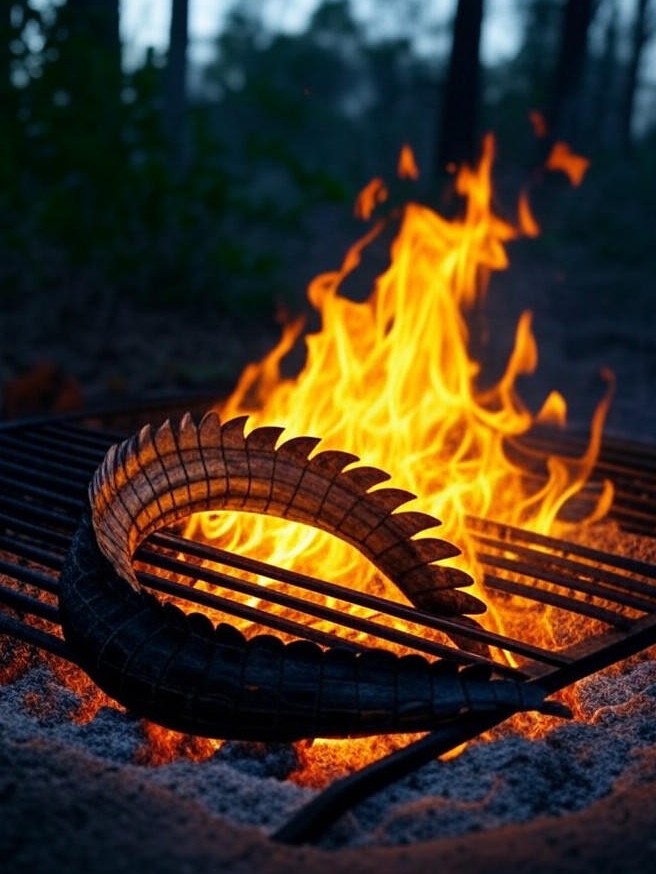
Imagine the crackle of a roaring campfire under a starlit sky in the heart of the Louisiana bayou, the air thick with the earthy scent of pine and marsh. As the flames dance, casting flickering shadows on your group’s eager faces, you skewer thick slices of alligator tail onto a sturdy grate. The exotic, tender meat—often called the ‘chicken of the swamp’—sizzles and pops, releasing a mouthwatering aroma that blends smoky char with subtle citrus and spice. This isn’t just dinner; it’s a primal feast that connects you to the wild, turning a simple camping trip into an unforgettable adventure.
Grilled alligator tail is the ultimate campfire recipe for outdoor enthusiasts seeking something beyond the usual hot dogs and s’mores. Alligator meat is lean, mild, and incredibly versatile, absorbing flavors beautifully over the open flame without drying out. It’s quick to cook, requiring minimal prep, which is perfect for those long days of hiking or fishing when you want to spend more time enjoying the wilderness than fussing in a makeshift kitchen. Field-tested on countless trips through the Everglades and backcountry trails, this dish delivers a firm yet juicy texture that surprises first-timers with its subtle sweetness, reminiscent of veal but with a wild edge. Safety is key in the great outdoors— we’ll cover how to handle the fire and meat properly to avoid any mishaps. Whether you’re a seasoned camper or dipping your toes into exotic eats, this recipe builds excitement around the campfire, sparking stories and laughter as you share bites of this Southern delicacy. Get ready to impress your crew and elevate your outdoor cooking game to legendary status.
Recipe Overview
Prep Time: 15 minutes
Cook Time: 10-15 minutes
Servings: 4
Difficulty Level: Medium (requires fire management and safe meat handling)
Special Equipment Needed: Campfire grill grate or cast-iron skillet, long tongs, skewers (optional), aluminum foil for resting, and a sharp knife for portioning. A meat thermometer is ideal for ensuring doneness without overcooking.
Ingredients List
- 2 pounds alligator tail meat, cut into 1-inch thick steaks or 2-inch chunks (source from a reputable butcher or fishing trip; if unavailable, substitute with firm white fish like monkfish for a milder alternative, but note it won’t replicate the unique texture)
- 2 tablespoons olive oil or neutral cooking oil (avocado oil works well for high campfire heat)
- Juice of 2 fresh limes (or lemons for a brighter twist; bottled juice is a fine campfire adaptation if fresh isn’t available)
- 3 cloves garlic, minced (use garlic powder if mincing fresh is tricky in the field)
- 1 teaspoon smoked paprika (enhances the campfire smokiness; regular paprika as substitute)
- 1 teaspoon cayenne pepper (adjust for heat preference; omit for milder palates)
- Salt and black pepper to taste (kosher salt recommended for even seasoning)
- Fresh herbs like cilantro or parsley for garnish (optional, dried versions hold up better outdoors)
- Wooden or metal skewers, soaked in water if wooden, to prevent burning over the fire
Step-by-Step Instructions
-
Prepare your campfire: Build a solid fire with hardwoods like oak or hickory for steady coals. Let it burn down to medium-hot embers (about 400-450°F; hold your hand 5 inches above the grate—if you can keep it there for 4-5 seconds, it’s ready). Safety first: Keep a bucket of water or sand nearby for emergencies.
-
In a resealable plastic bag or bowl, marinate the alligator tail: Combine the meat with olive oil, lime juice, minced garlic, smoked paprika, cayenne, salt, and pepper. Massage gently to coat evenly. Let it sit for 10-15 minutes while the fire preps. The citrus tenderizes the lean meat, infusing it with zesty notes that will caramelize beautifully.
-
Thread the marinated chunks onto skewers if using, or pat steaks dry for direct grilling. This prevents flare-ups from excess marinade dripping into the fire— a common campfire pitfall that can lead to bitter smoke.
-
Oil the grill grate lightly with a paper towel dipped in oil (use tongs to avoid burns). Place the alligator over the hottest part of the coals. Grill for 4-5 minutes per side for steaks, or 3-4 minutes per side for skewers, turning once. Listen for the sizzle and watch for golden-brown edges; the meat should firm up with a slight char, releasing a savory, smoky scent that draws everyone closer to the fire.
-
Check doneness: Alligator is safe at 160°F internal temperature—use a thermometer poked into the thickest part. Avoid overcooking to keep it juicy; it can turn tough like overdone chicken. Remove from heat and let rest on foil for 5 minutes, allowing juices to redistribute under the warm campfire glow.
-
Serve hot: Garnish with fresh herbs if available. Pair with campfire-roasted veggies or cornbread for a full meal. The texture is delightfully chewy yet tender, with a flavor explosion of spice and smoke.
Key Takeaways
- Alligator meat is very lean, so marinating is essential to prevent dryness—always err on the side of undercooking and use a thermometer for safety.
- For campfire adaptations, build your fire in a ring of stones to contain embers and reduce wind-related flare-ups; never leave the fire unattended.
- Handle raw alligator like poultry: Wash hands and surfaces thoroughly to avoid cross-contamination, especially in rustic outdoor settings.
- Variation: Add Cajun seasoning for an authentic Louisiana kick, or wrap in foil with veggies for a packet-style grill if direct heat is too intense.
- Storage tip: Leftovers keep in a cooler for up to 2 days; reheat gently over low coals to maintain texture—avoid microwaves if you’re truly off-grid.
- Sensory note: The grilling process fills the air with an irresistible smoky-lime perfume, perfect for bonding around the fire.
- Safety first: Source meat legally and sustainably; if foraging or hunting, follow local regulations to respect wildlife.
Ready to unleash your inner swamp chef? Pack up your gear, fire up that campfire, and grill some alligator tail on your next adventure. Share your twists in the comments—happy cooking under the stars!